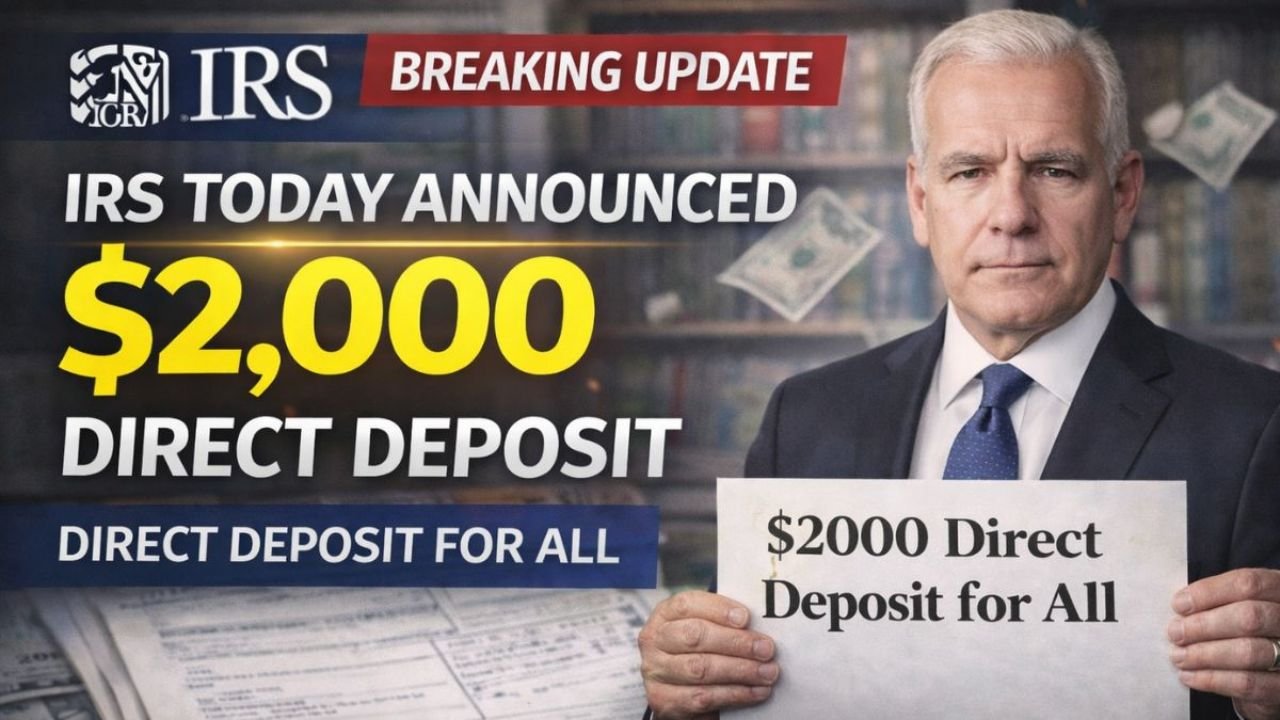
If you have been managing higher living costs, January 2026 brings some welcome financial clarity. The Internal Revenue Service has approved a one-time $2,000 direct deposit payment aimed at helping eligible Americans handle rising expenses. This payment is planned in advance and is intended to provide timely support at the start of the year, when household budgets are often under the most pressure.
What the $2,000 IRS Payment Is About
The IRS has described this payment as an Advance Financial Relief Credit. Unlike a regular tax refund, which arrives after filing, this amount is sent ahead of time to qualifying individuals. The goal is to offer early assistance so recipients can cover everyday expenses, emergency costs, or seasonal bills without waiting months for a refund. It is a short-term relief measure, not a permanent benefit or bonus.
Who May Be Eligible for the Payment

Eligibility is based on recent tax records and income information already on file with the IRS. The payment targets low- and middle-income individuals, working families, and people on fixed incomes. Income thresholds are designed to include a broad group of earners most affected by inflation. Individuals who filed recent tax returns and meet the income criteria are likely to receive the payment automatically.
How and When the Money Will Be Sent
The IRS plans to issue most payments through direct deposit using bank details from previous tax filings. Direct deposit is the fastest and most secure method. Individuals without bank information on file may receive paper checks or alternative payment methods later in January. Variations in banking systems and processing times may affect the exact arrival of funds.
Why This Payment Matters for Households
For many Americans, $2,000 can make a significant difference at the start of the year. It may help cover rent, utilities, groceries, medical costs, or reduce holiday-related credit card balances. While not intended to solve long-term financial challenges, it can provide temporary relief and reduce short-term stress during a financially demanding period.
How to Prepare to Avoid Delays

To ensure smooth receipt of the payment, it is important to keep IRS records accurate. Updating bank account details, confirming mailing addresses, and filing required tax returns on time can prevent delays. Regularly checking official IRS communications is the best way to stay informed and avoid misinformation.
Planning Ahead for the Payment
Advance notice allows households to plan responsibly. Instead of relying on speculation, people can budget realistically and decide how to use the funds effectively. Applying the payment toward essential expenses or savings can provide more lasting benefits than impulsive spending.
Final Thoughts on the January 2026 Deposit
The $2,000 IRS direct deposit scheduled for January 2026 is intended to ease financial pressure for eligible Americans. It reflects a proactive effort to provide timely support rather than delayed assistance. Staying organized and informed will help ensure the payment arrives without issues and fulfills its purpose effectively.

Disclaimer: This article is for informational purposes only and does not constitute financial, tax, or legal advice. Eligibility, payment amounts, and timelines are subject to official IRS rules and may change. Readers should rely on verified IRS announcements and consult qualified professionals for guidance specific to their situation.