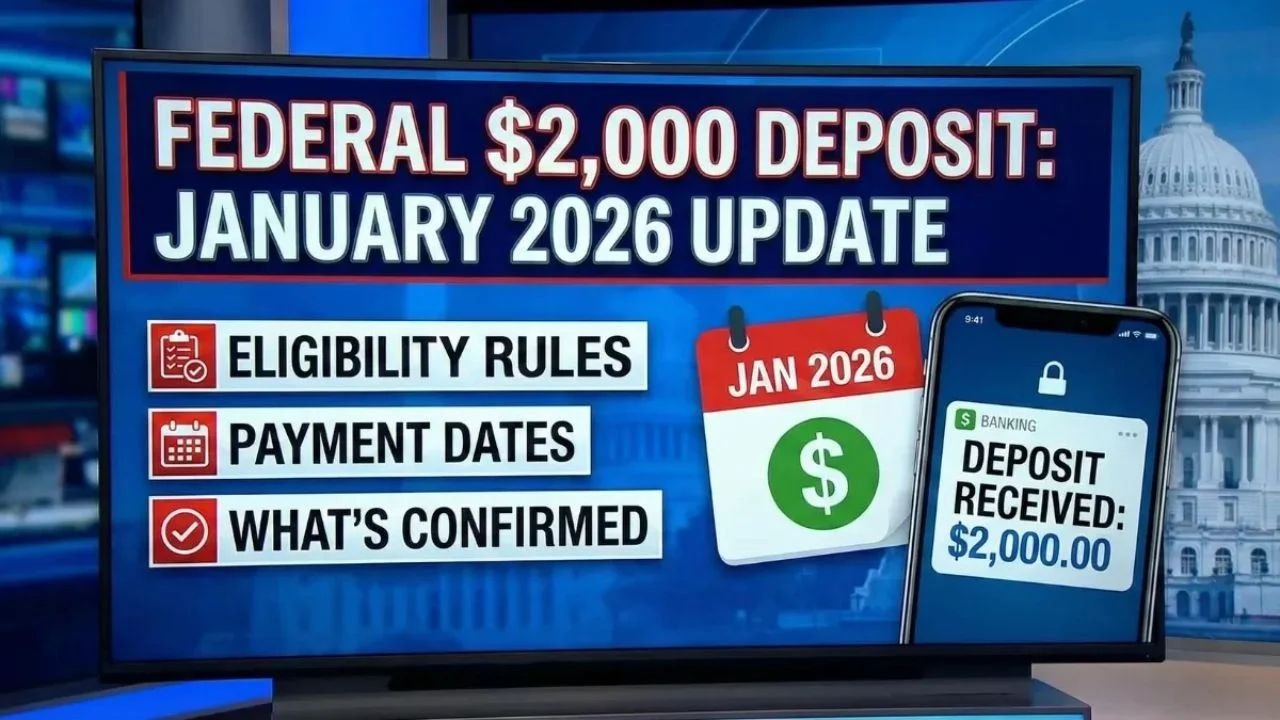
As January 2026 begins, many Americans are taking a closer look at their bank accounts and financial plans. The start of a new year often brings added pressure, including higher rent, insurance renewals, medical expenses, and lingering holiday bills. Against this backdrop, reports of a possible federal $2,000 deposit have sparked widespread attention. While some individuals may indeed see deposits around this amount, it is important to clearly understand what this payment represents and who may actually receive it.
Understanding the Federal $2,000 Deposit
The federal $2,000 deposit discussed in January 2026 is not a new nationwide stimulus program. There has been no announcement of a universal payment approved by Congress or launched by a federal agency. Instead, this figure generally refers to funds distributed through existing federal systems.

In most cases, these deposits are the result of tax refunds, benefit adjustments, or scheduled payments under long-standing programs. The amount may appear close to $2,000 for some individuals, but it is calculated based on personal eligibility and program rules rather than issued as a flat payment to everyone.
Why the $2,000 Amount Is Getting So Much Attention
Each January, interest in federal payments increases as tax season begins and benefit programs update annual figures. Social media and online forums often amplify individual experiences, creating the impression that a specific payment amount is widely distributed.
In reality, a refund or benefit payment near $2,000 is common enough to attract attention but not universal. Some people may receive more, others less, and many may receive nothing at all depending on their circumstances. The repeated mention of this amount has fueled confusion, especially when personal deposits are presented as official announcements.
Who May Qualify for a Federal Deposit in January 2026

Eligibility for federal deposits depends on participation in existing programs rather than citizenship alone. Payments are automatically issued to individuals who qualify under specific criteria, with no new application required in most cases.
Taxpayers Receiving IRS Refunds
Individuals who overpaid taxes in 2025 or qualify for refundable credits may receive refunds early in the filing season. For early filers who choose direct deposit, funds can arrive as soon as late January.
Social Security Beneficiaries
Retirees, survivors, and individuals receiving disability benefits may see regular monthly payments or adjustments deposited according to the Social Security Administration’s schedule.
Veterans Receiving VA Benefits

Veterans enrolled in compensation or pension programs may receive deposits in January based on existing benefit structures and cost-of-living adjustments.
Low-Income Households in Federal Assistance Programs
Some households enrolled in federal support programs may receive payments or adjustments tied to annual eligibility reviews or benefit updates.
Why the Deposit Amount Can Vary
The $2,000 figure is an estimate rather than a guarantee. Federal payments are calculated individually, taking into account a range of factors that differ from person to person.
These factors include income level, filing status, number of dependents, benefit type, and any adjustments from prior years. Because of these variables, even individuals in similar situations may receive different amounts, which contributes to uncertainty and mixed expectations.
Expected Payment Timing in January 2026
There is no single date when all federal deposits are issued. Timing depends on the agency responsible for the payment and the recipient’s specific situation.
IRS-Related Payments
Tax refunds may begin arriving in January for early filers who submit accurate returns and select direct deposit. Others may wait several weeks depending on verification and processing.
Social Security and SSI Payments
Social Security benefits follow a monthly schedule based on birth dates, while Supplemental Security Income is typically deposited at the beginning of the month.
Veterans Affairs Payments
VA benefits are generally issued at the start of each month, though weekends and holidays can shift deposit dates slightly.
Bank processing times and federal holidays can also affect when funds become visible in accounts.
How Federal Payments Are Delivered
Direct deposit remains the primary and most reliable method for federal payments. Funds are sent to the bank account already on file with the relevant agency. Individuals without direct deposit may receive paper checks or, in limited cases, prepaid debit cards.
Keeping banking and mailing information current is essential. Outdated details are a common cause of delayed or returned payments.
Steps Beneficiaries Should Take Now
Beneficiaries can take simple steps to ensure payments arrive smoothly and on time.
Confirm eligibility under applicable federal programs.
Update bank account and mailing information through official portals.
File tax returns accurately and as early as possible if expecting a refund.
Use official government tools to monitor payment status.
Federal agencies do not request sensitive information through unsolicited phone calls, emails, or text messages. Any such contact should be treated with caution.
Why This Deposit Matters to Households
For many Americans, a deposit near $2,000 is not discretionary income. It often goes toward essential needs such as rent, utilities, groceries, medical care, or debt repayment. For individuals on fixed or limited incomes, even one timely payment can ease financial stress during the winter months.
Beyond the immediate financial impact, understanding how and why these payments occur helps households plan more effectively and avoid disappointment driven by unrealistic expectations.
Final Thoughts
The federal $2,000 deposit discussed in January 2026 reflects ongoing support provided through established federal programs rather than a new universal payment. While some beneficiaries may see deposits around this amount, eligibility and timing vary widely based on individual circumstances.
Staying informed, maintaining accurate records, and relying on official government sources are the best ways to navigate federal payments with confidence. With clarity and preparation, uncertainty can give way to stability as the new year unfolds.
Disclaimer
This article is for informational purposes only and does not provide financial, tax, or legal advice. Federal programs, eligibility requirements, and payment schedules may change. Readers should consult official government resources or qualified professionals for guidance specific to their situation.